
Active Travel Ambassadors
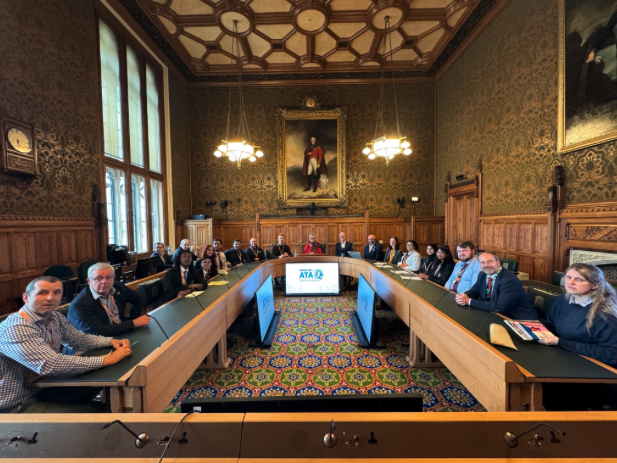 The APPG for Cycling and Walking met on 18 May 2026 to hear from Modeshift about their Active Travel Ambassadors programme. Modeshift is a national sustainable travel organisation that works with schools, local authorities and partners across the country to make everyday journeys safer, healthier and more active. Their flagship STARS programme is one of the most widely used school travel accreditation schemes in England, and the Active Travel Ambassadors programme represents their most ambitious attempt yet to put young people at the centre of that work, training pupils to lead campaigns in their own schools and communities rather than simply receiving information from adults.
The meeting was chaired by Baroness Barker and brought together parliamentarians, practitioners and stakeholders for what turned out to be one of the most engaging sessions the group has held this year.
Nick Butler, Chief Executive of Modeshift, opened the session by setting out the scale and ambition of the programme. With three years of funding secured and a target of working with 150 schools in the coming year, the programme is at a genuine inflection point. Nick described how the ATA model differs from more traditional approaches. Rather than telling young people what active travel is, it gives them the tools, the platform and the confidence to make the case for it themselves.
We were delighted to welcome Ed Clancy, Active Travel Commissioner for South Yorkshire, who spoke about what the programme looks like on the ground. Ed was clear that infrastructure alone will never be enough. The missing ingredient is sustained human engagement, and that is exactly what the ATA programme provides. His experience working across South Yorkshire has shown him that when young people feel genuinely heard by decision-makers, something shifts, and it tends to stick.
The highlight of the session was hearing directly from pupils and staff from two participating schools. Representatives from Hinde House 2-16 Academy in Sheffield described how they had taken on pavement parking and school gate congestion in their area, gathering data, engaging local councillors and pushing for real change. What came through most strongly was how much it had meant to the pupils involved to feel that their work actually mattered. King Edward VI Camp Hill School for Girls spoke about the knock-on impact of school run traffic on neighbouring primary schools and had even developed a concept for an app to help parents find safer walking routes. Both schools were a credit to the programme, and their contributions gave the room a very clear sense of what is possible when young people are given genuine responsibility.
Professor Ian Walker of Swansea University then presented his independent research on the programme’s impact. He made a compelling case for measuring what actually matters rather than just what is easy to count, pointing to the social, mental health and community benefits of active travel that rarely make it into official assessments. His numbers were striking. Conservative modelling suggested the programme had already removed the equivalent of around 700,000 car kilometres from the roads in the schools he studied, and scaling this approach across the secondary school sector in England could deliver savings of several million pounds a year in collision costs, carbon and productivity alone.
Chris Pryor, ATA Programme Manager at Modeshift, closed the presentations with an overview of where the programme is heading next, including a national active travel schools conference in London in June that will bring together local authorities and schools from across the country to share what is working.
Key issues raised in the discussion
– The importance of senior leadership buy-in within schools, and the role that competitions and external recognition play in generating and sustaining enthusiasm among pupils
– How to ensure the programme reaches schools in less well-connected and more deprived areas, rather than concentrating on those already engaged with active travel. Something Modeshift acknowledged as a genuine challenge and one the June conference is partly designed to address
– How the ATA programme can be better joined up with other national initiatives around active travel, physical activity and school travel, and the opportunity the national conference presents to build those connections