
Lilian Greenwood – CWIS3
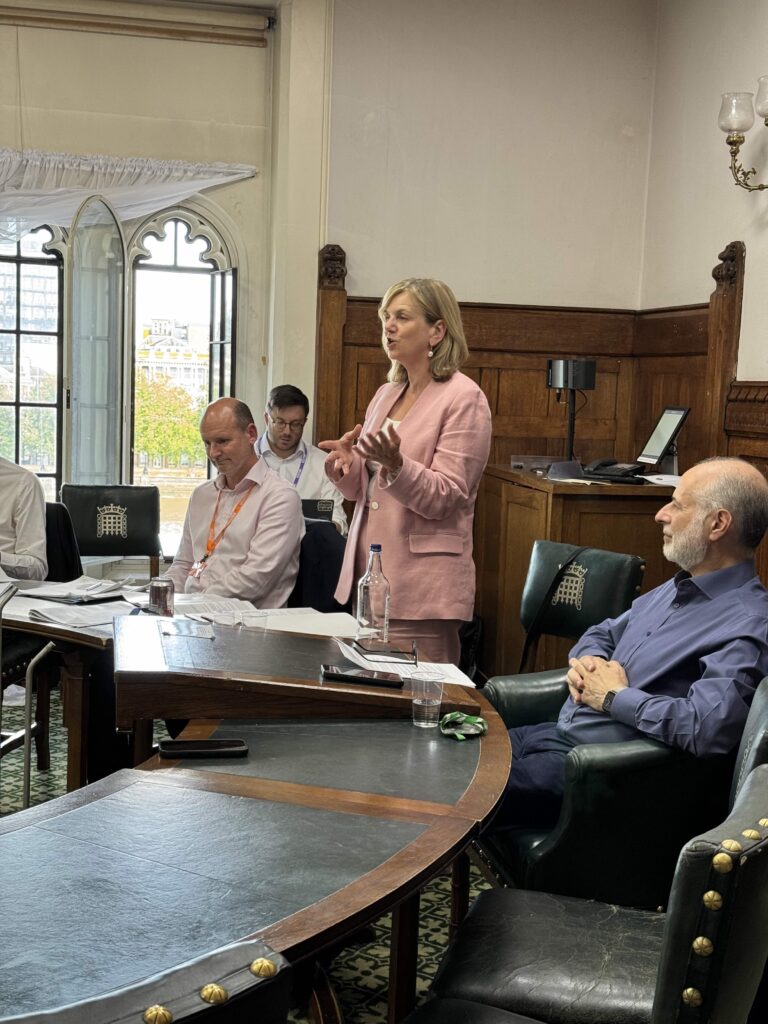
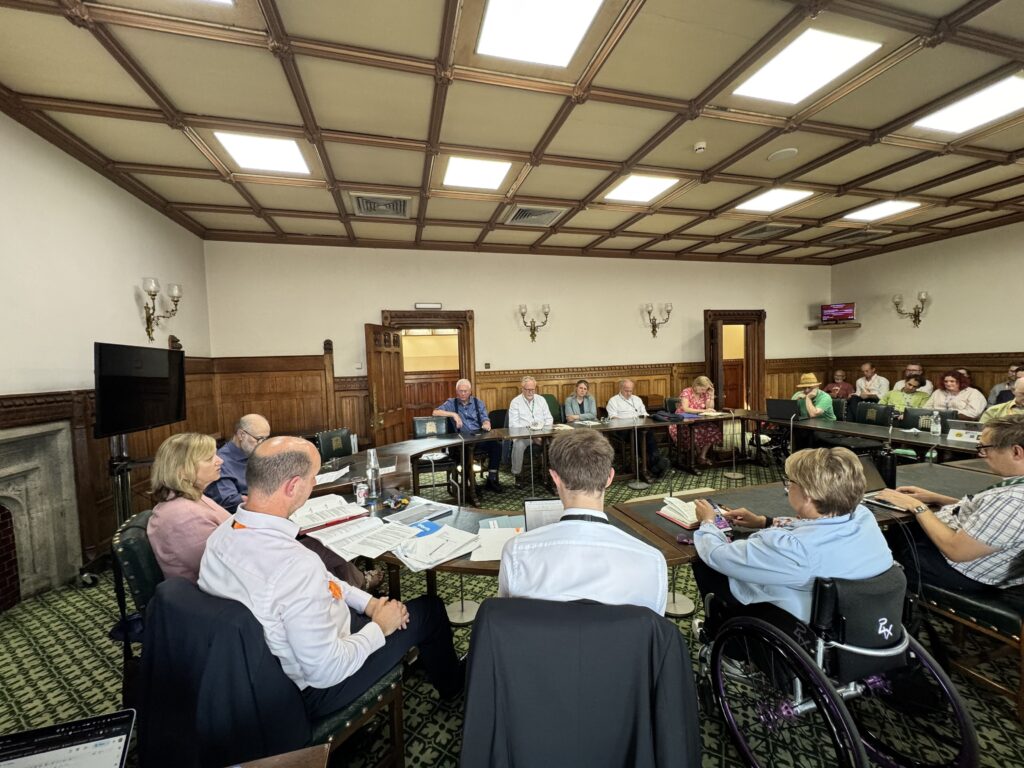
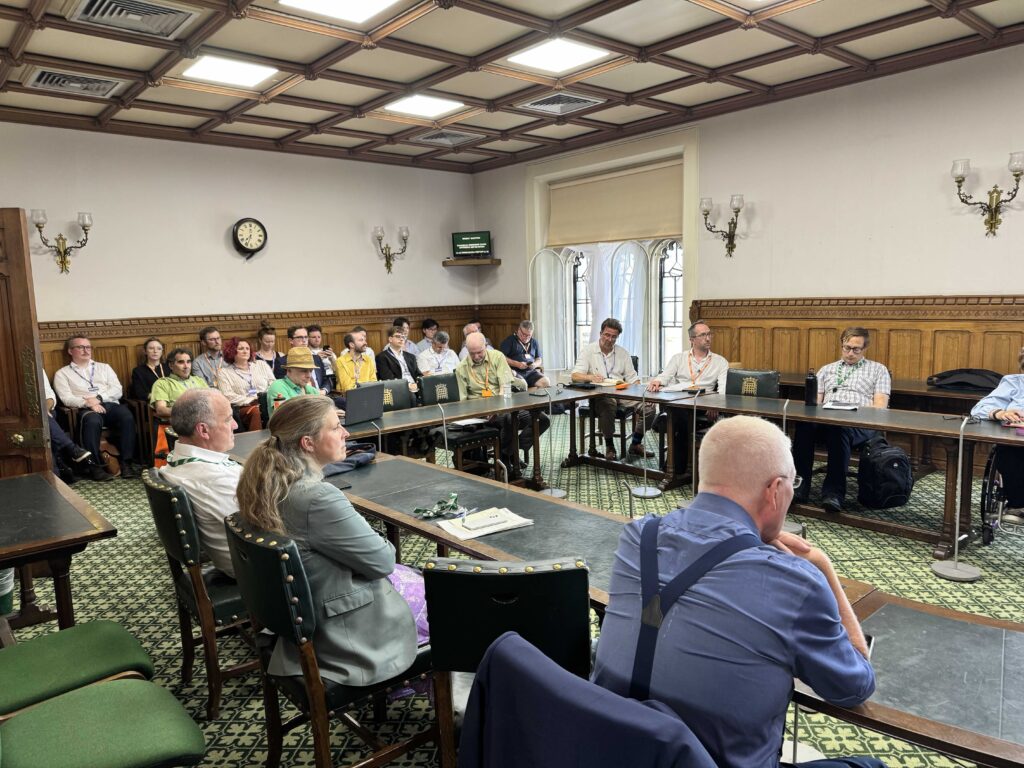
I’m delighted to join you this afternoon and to see many of you again following last week’s Parliamentary Walk and Wheel to the Elephant and Castle, and prior to that, the annual Parliamentary cycle ride. In between these two great events, I am proud that my department published the third Cycling and Walking Investment Strategy, or CWIS3 as it’s commonly known.
This government believes that walking, wheeling and cycling should be safe, easy and accessible choices. So our strategy will lift the barriers that stop people heading out under their own steam.
It’s based on three aims:
- Getting more people moving through active travel.
- Making it the easy choice that integrates with other forms of transport.
- Improving safety, which remains the biggest barrier, especially for women and children.
So we’ve set ourselves some big targets. By 2035, we aim for 55% of all short stages across towns and cities to be walked, wheeled or cycled. And for 60% of children to walk or cycle to school most days. That’s a real step change. We’ll start with safer routes to schools, because helping children build healthy habits is one of the most powerful investments we can make. Meeting our targets will pay wider dividends. Over 5 million more people will become physically active. More than 4 million sick days will be prevented. And, of course, there will be cleaner air and clearer roads for everyone. A real step change requires building opportunities for active travel into the heart of our transport systems.
So how will CWIS3 achieve this transformation? Firstly, real transformation like this needs proper investment. It means a projected £4.5 billion being invested in active travel up to 2030, including through Transport for City Region and Local Transport grants. Over £1 billion of this will go to Active Travel England. Secondly, it’s about local design and delivery. CWIS3 was shaped in partnership with mayors, local leaders and communities who know their areas best. CWIS3 marks a fundamental shift in how active travel ambition is set, delivered and integrated into local transport networks. It is the first locally designed national strategy, delivered in line with our ambitious programme of English devolution. Mayors have already signed a pioneering joint agreement to link neighbourhoods in their areas to schools, high streets and transport hubs through more than 3,500 miles of safer streets and paths. And there are plans to scale that work across the whole of England.
Finally, it’s about better connecting us across the nation for a consistently good experience, wherever you are. My department will provide the tools to tackle everyday frustrations and improve street management. That means putting people at the heart of plans, not vehicles. We’ll begin with new laws to ban pavement parking, an update to the Manual for Streets and to guidance on local speed limits, and simpler zebra crossings on side roads. But that’s only the start. We’ll begin mapping a national active travel network to link up thousands of miles of routes — ones that are already built, funded or planned — to give high-quality options for walking, wheeling or cycling right around the country. So you can see we have big ambitions. You can tell I’m proud of my department’s plans, and proud that CWIS3 is more joined up across government than previous iterations.
CWIS3 will weave walking, wheeling and cycling into the fabric of national life, to help more people get out, get about and get on. Thank you.
Q&A
Q1. How will the target for modal share be divided between regions to ensure that it
happens on the ground and Q12. How will the targets at a national level cascade to
Strategic & Local Authorities? Will ATE suggest a local aim for each or at least
monitor local targets? [grouped as cover similar points]
A.
The approach to target setting will depend on the type of local authority. The six biggest
and most established Mayoral Strategic Authorities will have specific targets for active
travel, and we’ll work with them to set these. For other authorities we want to see them set
broad outcomes as a result of improving active travel, but we’re not setting explicit targets
at this stage. Performance will however be monitored and may influence future funding
decisions.
Active Travel England will support local authorities to deliver their local active travel
ambitions and to develop and deliver phased, funded active travel network plans in line
with the Government’s devolution agenda.
Q2. Has the funding for this third investment strategy been made available for
spending, or if not what date would you anticipate the funds will be available?
A.
All funding has been announced since July 2024, but prior to publication of the Strategy
with the exception of City Region Sustainable Transport Settlements (CRSTS) funding
which was announced by a previous Government and started in 2022. Of the projected
£4.5 billion for active travel between 2025 and 2030, just over £1.1 billion is funding for
Active Travel England.
Q3. How will you protect the pavements from technological advancements over this
period? (from e-bikes, e-scooters to delivery robots, and whatever may be next)
A.
The Government is aware that pavement robots are being used in some towns around the
country and we have committed to pursuing legislative reform for micromobility vehicles
when parliamentary time allows by creating a ‘Low-speed Zero Emission Vehicle’
category. This could be used to regulate pavement robots in future. However, pavements
must remain a safe space for people walking and wheeling and safety will remain our top
priority whilst considering regulation for new technology, and any new regulations will be
subject to public consultation and an impact assessment before they come into force.
Q4. How do you reconcile the tension between absolute KSI targets in the Road
Safety Strategy and the plan to set rate-based targets in CWIS3? Growth in active
travel could mean more KSIs despite increased safety.
A.
Our targets for increasing active travel by 2035 are in line with our ambitions in the Road
Safety Strategy. Fundamentally, we’ll only hit our CWIS3 targets if our roads are safer to
walk, wheel or cycle. In the Road Safety Strategy, we set targets to reduce the number of
people killed or seriously injured on British roads by 65%, and 70% for children, by 2035.
The provision of well-maintained footways, safe crossings, school streets and high-quality
segregated cycle infrastructure on routes to school make a difference and Active Travel
England’s delivery plan sets out how they will work with partners to turn that strategy into
action to deliver. This is backed up by investment and of the £1.1 billion for Active Travel
England, £760 million is for better and safer walking, wheeling and cycling infrastructure.
Q5. Has DfT assessed the funding needed to meet the CWIS3 target and outcomes?
If so, will it publish this?
A.
The actual amount of funding will depend on a range of factors including the types
of active travel and other complementary measures that local authorities introduce. Further
uplift in active travel journeys is expected through investment in bus services; development
of a national network and providing long term funding certainty. Future policy changes may
also deliver further uplifts as could higher than projected local investment through the
devolution of local transport funding.
Q6. Will DfT provide a CWIS3 funding breakdown, showing what capital and revenue
funding is coming from what sources, and for what purposes?
A.
The Majority of funding is capital funding with £760 million of devolved funding for walking,
wheeling and cycling infrastructure schemes administered by Active Travel England. This
is in addition to £135 million of revenue funding to support schools and community-focused
programmes that will train and support millions of children to walk, wheel and cycle to
school and support people to start cycling or ride again.
It is not possible to provide a breakdown of the projected wider funding for CWIS3 at this
time, but we will publish details in future Reports to Parliament.
The breakdown of the projected funding is as follows (rounded)
|
Funding source |
Projected investment (£ million) (rounded) |
|
ATE funding |
£1107 |
|
Transport for City Regions |
£1333 |
|
Highways Maintenance Fund |
£802 |
|
City Regions Sustainable Transport Settlements |
£644 |
|
Local Transport Block |
£504 |
|
Pride in Place |
£77 |
|
National Highways |
£55 |
|
Integrated Transport Block |
£34 |
Q7. What are the biggest barriers to meeting the target objectives in the strategy?
(Political, policy, legal, capability, finance, other?)OFFICIAL
A.
We know that perceived and actual safety are the biggest barriers for walking and
wheeling but particularly cycling. Active Travel England are supporting the delivery of
investment in well-lit, safe, high-quality walking, wheeling and cycling routes, which
increases personal safety and perceptions of safety. We have a big opportunity through
devolution for local places to take the lead and Mayors are supporting this through
a landmark joint agreement with DfT and Active Travel England to provide more than
3,500 miles of safer routes linking schools, neighbourhoods, high streets and transport
hubs
Q8. Could the increased emphasis on local autonomy under a Burnham
Government affect the delivery of the CWIS targets?
A.
The Government approach to devolution and the devolution of local transport funding is
central to CWIS3 and we view CWIS3 as the first locally-designed national strategy
delivered in line with our ambitious programme of English devolution. The success of the
focus on active travel in Greater Manchester is well known and is included as a case study
in Active Travel England’s delivery plan.
Q9. Cycling UK has called for a specific target to reduce the gender gap in cycling
participation. Although CWIS3 has now been published, would the DfT consider
introducing such a target as part of its implementation and monitoring framework?
A.
We have decided to take a laser like focus on target setting in CWIS3 with the one main
55% target by 2035. However, there is a gender gap when it comes to cycling and we
know that there are other gaps when we look at walking and cycling levels across different
protected characteristics.
Work is already underway by Active Travel England and I recently met with a group of
women with Living Streets ahead of the Living Streets national walking summit to discuss
the issues around personal safety.
Active Travel England have launched the Women and Girls’ Safety Programme, focussing
on safety and perceptions of safety for women and girls in relation to active travel. This
includes developing design and delivering training sessions introducing how active travel
can be made safer and more inclusive for women and girls. Over 1,500 local authority
officers and delivery partners signed up across the two sessions.
Q10. Disabled people are among the least active. Will the minister consider further
measures, like ensuring there’s good quality parking available, suitable for Disabled
peoples’ mobility aids, at home, in workplaces etc?
A.
Our vision for walking, wheeling and cycling to be safe, easy and accessible choices for
everyone and Active Travel England will support this by increasing participation of under-
represented groups across investment programmes by making programmes and the
physical environment more accessible in line with departmental design guidance. Active
Travel England’s delivery plan outlines how it will support local authorities to improve
design and apply guidance, providing assurance in ways that support inclusive, accessible
journeys.
Furthermore, Better Connected commits to developing an Accessible Travel Charter which
aims to incentivise transport providers and local government to acknowledge and remove
the obstacles that impact disabled people. The Charter will set out ambitious
commitments, delivered through practical outcome focused pledges.
Q11. It’s great to see the commitment in CWIS3 to a national active travel network.
Will this include a dedicated network for walking, with a hierarchy of routes to focus
investment?
A.
By 2030, Active Travel England will establish the basis for a national active travel network
by connecting the high-quality local routes already built, funded or planned. This brings
together walking, wheeling and cycling routes including local cycling and walking
infrastructure plans (LCWIPs), National Cycle Network and programmes delivered by
partners such as National Highways. Active Travel England’s delivery plan outlines the
timescales for delivery up to 2030.