
Lilian Greenwood
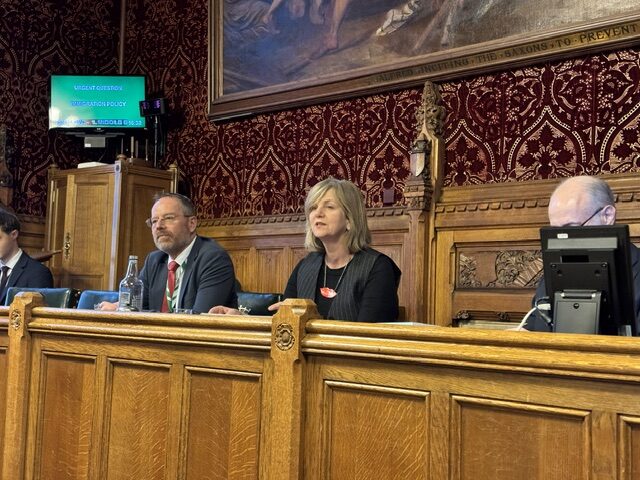
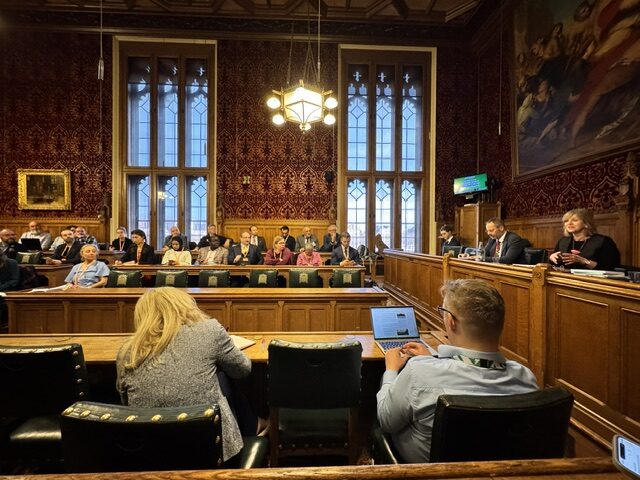 The APPG for Cycling and Walking and the APPG Transport Safety were pleased to welcome Lilian Greenwood MP, Minister for Local Transport, to speak about cycling and walking policy and the links to road safety and wider public priorities. The session was chaired by Fabian Hamilton MP.
The Minister welcomed the opportunity to speak with the Group and set out two headline priorities. The first was the Government’s ambition to make active travel the mode of choice for more people, more journeys, and in more places. The second was ensuring that all road users, including people walking, cycling, driving, and wheelchair users, can use the roads safely.
In her opening remarks, the Minister argued that giving people a genuine choice in how to travel can be transformational. She highlighted the potential to reduce congestion, improve public health and support local economies. She also framed active travel as an issue of inclusion and opportunity, including improving access to jobs, public services and social connection. The Minister acknowledged barriers to uptake, including the prevalence of short car journeys and safety concerns, which deter people from cycling, particularly women.
The Minister emphasised that increasing walking and cycling and improving road safety are closely linked and that one cannot succeed without the other. She referred to work underway across government, including a new cycling and walking investment strategy and road safety measures aimed at protecting vulnerable road users alongside updates to guidance and standards that shape how streets are designed and managed.
The session then moved to questions from parliamentarians in the room. These included how to close the gap between ambition and delivery and what Parliament and stakeholders can do to support the implementation of measures that can be politically challenging. There was also discussion about the potential to unlock lower-cost route options, including adapting suitable rights-of-way and similar alignments where cycling is not currently permitted. Members also raised how to increase cycling levels through safer infrastructure, access to bikes, and training, and how the government can respond to narratives that undermine confidence in cycling.
The meeting also worked through a set of pre-submitted questions. These covered road safety enforcement and outcomes, including how progress will be monitored and how enforcement can be strengthened. Questions also addressed sentencing and driving offences, and the Minister noted that sentencing decisions rest with the courts and the wider justice process, while recognising concerns about seriousness and consistency. The session discussed work-related road risk, including delivery riders, with the Minister acknowledging concerns about unsafe behaviour and the need to work with businesses on safety and compliance. Other questions covered school travel, including school streets and safer routes to school, side-road zebra crossings, pavement obstructions, vehicle standards, procurement levers, and micromobility, including e-scooters. On micromobility, the Minister recognised the need for a clearer regulatory framework and stronger local tools for managing shared schemes, but did not commit to a timetable during the meeting.